BTS – Basic Triple Staple
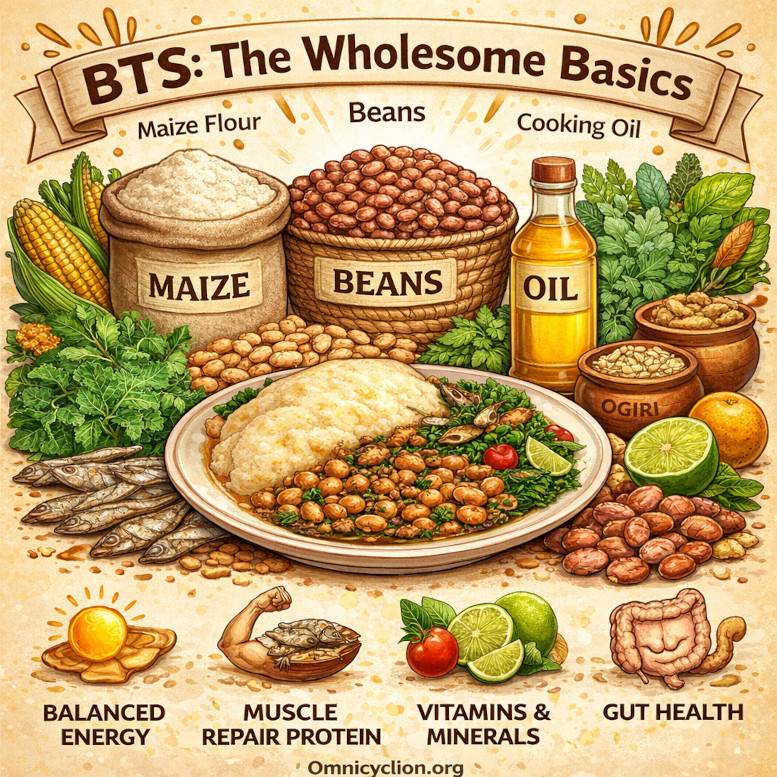
Combining maize flour, beans, and a small measure of oil in a 10:5:1 ratio is not just practical—it is a deeply intelligent alignment with how life sustains itself. Maize offers abundant, steady energy through its carbohydrates, yet on its own it is incomplete; beans enter as its natural counterpart, restoring balance by supplying essential amino acids—especially lysine—so that together they form a complete, body-repairing protein. The addition of oil, though modest, unlocks another layer: it enables the absorption of fat-soluble vitamins, increases caloric density for strength and recovery, and smooths the body’s energy curve into a calm, sustained release. What emerges is more than a meal—it is a living synergy of fuel, repair, and regulation, a simple expression of wholeness where each part completes the other. In this way, BTS reflects a deeper truth: nourishment is not about isolated components, but about relationships that restore completeness.
To elevate this Maize/Beans/Oil Basic Triple Staple into something even more life-giving—without breaking affordability—the land itself offers the answer across Africa. Dark leafy greens such as amaranth, cassava leaves, moringa, or kale bring vitality: rich in vitamins A, C, K, folate, and essential minerals, they strengthen immunity and deepen the body’s resilience. Small dried fish eaten whole—like dagaa or omena—add a powerful layer of bioavailable calcium, iodine, zinc, and omega-3 fatty acids, quietly supporting bones, brain, and long-term vitality. Fermented foods—ogi, iru, or fermented cassava—act as unseen allies, enhancing digestion, unlocking nutrients, and nurturing the gut ecosystem that underpins health itself. Even small additions of groundnuts or sesame seeds enrich the meal with healthy fats and extra protein, while citrus or tomatoes amplify iron absorption from the beans. These are not luxuries—they are intelligent, local refinements. Together, they transform BTS from a strong foundation into a near-complete nourishment system: affordable, accessible, and profoundly aligned with life.
At its best, BTS is a quiet engine of human strength. It delivers long-burning energy for daily work and recovery without the instability of refined foods; it supports steady muscle maintenance through its complementary proteins; it stabilizes appetite and blood sugar, creating clarity and endurance rather than spikes and crashes. More importantly, it establishes what could be called nutritional dignity—a reliable baseline where deficiency is prevented, immunity is supported, and the body is given what it needs to function with quiet strength. This is where BTS reveals its true power: not in spectacle, but in consistency. It can nourish individuals, families, and entire communities over time, making it a cornerstone for food security, healing, and resilience. It is not flashy—but it is faithful.
Across Africa, BTS expresses itself in countless local forms, each one a conversation between people and land. Maize may give way to sorghum, millet, or cassava flour—grains that endure heat, drought, and changing climates while offering their own mineral strengths. Beans may rotate between cowpeas, pigeon peas, lentils, Bambara groundnuts, or regional varieties, each adapted to its environment. Oils emerge from what grows nearby: red palm oil rich in provitamin A, groundnut oil for balance and accessibility, sesame for mineral density, sunflower where it thrives. The principle remains beautifully simple: combine what is abundant, complement what is missing, and enrich what is present. This creates a living system of nourishment that is culturally rooted, economically viable, and nutritionally whole.
And in that simplicity, something deeper becomes visible: BTS is not just food—it is a pattern. Each element supports the others; nothing stands alone; strength emerges through connection. In feeding the body this way, communities are quietly practicing a larger truth—that life thrives when parts come together in balance, when WE completes ME.